The New York State Department of Environmental Conservation is reminding residents to watch for giant hogweed, an invasive plant that can cause severe skin burns and permanent scarring.
The plant, which can be found throughout New York, poses a health risk because its sap reacts with sunlight. Simply brushing against the plant or breaking its stems or leaves can release sap that may cause painful burns, blistering, and long-term skin damage.
How to Identify Giant Hogweed
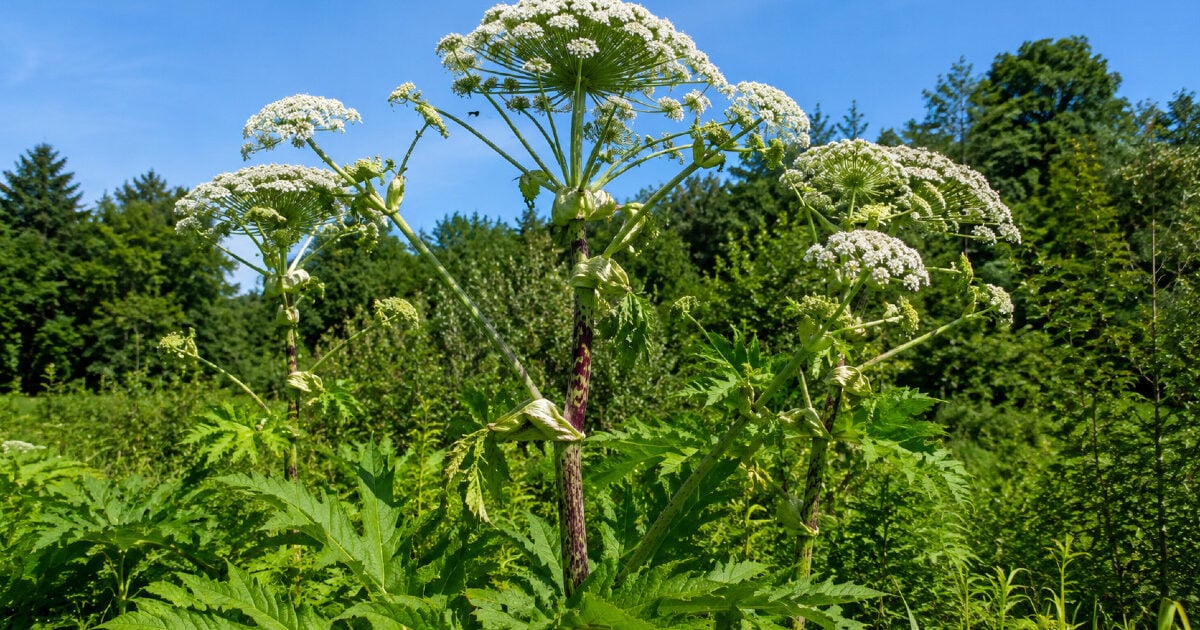
According to the DEC, giant hogweed can grow up to 14 feet tall and has several distinctive features:
- Hollow stems measuring 2 to 4 inches in diameter with dark reddish-purple blotches.
- Large compound leaves that can reach up to 5 feet across.
- White flower clusters up to 2½ feet in diameter.
The invasive plant is commonly found along streams and rivers, in fields and forests, and along roadsides. It also can grow in residential yards, particularly in sunny areas with moist soil.
What to Do if You’re Exposed
Anyone who comes into contact with giant hogweed sap should immediately wash the affected area with soap and warm water and avoid exposing the skin to sunlight for at least 48 hours.
Working Around Giant Hogweed
The DEC urges anyone removing or controlling giant hogweed to take proper safety precautions, including:
- Never touch the plant with bare skin.
- Wear waterproof gloves, long sleeves, long pants, boots, and eye protection.
- Wash thoroughly after working around the plant or anytime contact is suspected.
Property owners who discover giant hogweed on their land are encouraged to follow recommended control methods while using appropriate protective equipment to avoid exposure.