Paul Szmal: Now we're happy to welcome in Christina Ehlers from Cornell Cooperative Extension. We talk every month about food and nutrition. Christina, how are you this morning?
Guest: I'm good, Paul. How are you?
Paul Szmal: I am good. I am good. It's a good month because it's National Dairy Month.
Guest: It is. June is National Dairy Month and there's so many great benefits to dairy. It has a great way to start your summer with nutritional rich dairy foods. Your strawberries are in season now as well, so making homemade whipped cream or doing those kind of things with the fresh fruits, the combination. It just is a really great way for a nutritional rich foods for your family.
Paul Szmal: I love fruit and yogurt or fruit and cottage cheese myself and I didn't realize just how many dairy farms are in the region. This is a pretty happening place for that.
Guest: Yes, actually our local dairy and creameries right here in Seneca County. We have our family farm creamery down in Lodi, Central Lakes Creamery in Interlaken, Miranda Cheese Company in Waterloo, Wise Country Creamery in Seneca Falls, the Jersey Bell Farm in Waterloo, and Crosswinds and Creamery in Ovid. So yes, there's a great wide variety of where people can get fresh dairy.
Paul Szmal: And one of the great treats that you can have this time of year, two words, ice cream.
Guest: I know, right? I'm actually a little more part, I'm a little more partial to custard, which is not as easy to find, but it's got the higher fat content, it's richer. So yes, actually our dairy in the classroom, we're finishing up a lot of the schools last week, this week, all of June basically, and we're making ice cream in a bag for all of them. So it's going to be, it's a great treat and they really enjoy watching, you know, half and half and the milk and stuff turn into ice cream. So it's a great educational program as well.
Paul Szmal: Yeah, anytime you get to eat the results, it's a good thing. It is, definitely. Christine Ellers is here from Cornell Cooperative Extension on FLX Morning. We've got one of the more popular fruits as our harvest of the month.
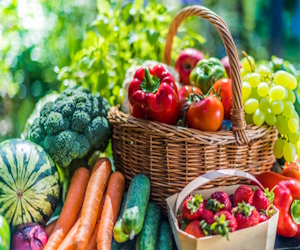
Guest: Yes, so you know, strawberries are very popular, you know, they're out and ready. I'm very glad to see them last week. I did a workshop with our master food preservers in Ovid and all about strawberries. And so they were in the stores just in the nick of time for me to utilize them. But yeah, so strawberries contain many antioxidants and vitamins. They have carbohydrates, they're simple sugars. The glycemic index rates them at a 40, which is great because it's a lower index, which it just has a lot of fiber. It has more vitamin C than an orange. And I don't think people realize the great benefits for the vitamin C actually for strawberries. So that's just a great fruit to have. And you should enjoy them since they're local right now. So go out and pick some or get some at your local stands.
Paul Szmal: Yeah, you can make pies, you can put it on ice cream, strawberry shortcake, even just by themselves, they're delicious.
Guest: They are, they are. There's some veggies that are being harvested this time of year too.
Paul Szmal: Exactly.
Guest: So we have our spring greens, peas and radishes, rhubarb, some beets also. So these are being harvested and you can see them at a lot of the farmers markets, which are up and running now. And yeah, so provide those, intertwine them in some of your meals and I'm sure your family will love them.
Paul Szmal: Yeah, since you mentioned farmers markets, Christina, we might as well go ahead and update everybody on the start dates for the farmers markets around the region.
Guest: Yes. So actually the Waterloo farmers market started last week and on Thursday and they run from two to six and they are going to be, they're located at GEMS on Route 5 and 20 here in Waterloo. Seneca Falls market started on Tuesday, this past Tuesday, and they run from two to six and the Ovid farmers market will be starting up this Saturday from nine until 12 at the Three Bears down in Ovid.
Paul Szmal: Yeah, some great chances for you to pick up some locally grown products. You get to, what's the word I'm looking for, you get to do the transaction directly with the farmers, kind of eliminates the middleman.
Guest: That's right. Yeah. And really, you know, this is the way it's good first step to really, if you haven't done so, introduce your family to the whole concept of farm to table.
Paul Szmal: Exactly, exactly.
Guest: So, you know, providing the costs of the labor and the products and the farmers are right there. So, you know, these family operated farms, produce farms, it's really important for them to be supported by the community and, you know, you're paying directly to them for their costs. So, yeah, it's a great way to support them.
Paul Szmal: And of course, this time of year, people that have a green thumb, shall we say, like to grow some of their own veggies, fruits, et cetera, et cetera. And everything from outdoor gardens to maybe, you know, home gardens for, you know, things like herbs and stuff like that, that you can use in your food. And one of the things that CCE has been asking people to do is called plan a row for pantries.
Guest: Yes. So, you know, growing an extra row in your garden definitely helps out your local food pantries. You know, we all have access produce when we do have a garden and, you know, donating it to your local food pantries helps them provide, you know, local fresh produce to people that might not be able to have a garden and, you know, the higher risk population needs to have access to this. So, growing an extra row in your garden for your local food pantries, you know, your bounty can help nourish others in your community.
Paul Szmal: Yeah. We often hear food pantries asking for non-perishable food items for the obvious reason, they're non-perishable. But in order to really eat a good diet, you need to balance a lot of that ultra processed food or minimize it and trying to maximize the amount of whole foods or natural, you know, unprocessed foods. So, if you're growing an extra row of tomato plants in the garden, you can donate those to a food bank and now you're helping people to really be able to achieve that balanced diet.
Guest: Exactly. And, you know, I like working with the food pantries in the aspect of, you know, our master food preservers. We can help utilize and spread, you know, that knowledge to everyone in regards to, you know, once you get that produce, we can help you preserve them naturally, you know, canning and that kind of thing. So, you'll be able to have that available and it's a more economical way to feed your family.
Paul Szmal: Yeah. Yeah. Helps make the product go longer than, you know, feeling like, oh, I've got to eat this in the next day and a half before it goes bad.
Guest: Exactly. So, there's so many different ways, you know, by canning, dehydrating, freezing. So, helping everyone, you know, make sure and stretching that dollar a little bit more.
Paul Szmal: Absolutely. Christina, if people want to find out more information about the farmers markets or any upcoming, as you talked about, food preservation, I know CCE does classes for that and that sort of thing. Where can people find that information?
Guest: Please visit our website at SenecaCountyCCE.org.
Paul Szmal: At SenecaCountyCCE.org. Christina, as always, I appreciate it and now I'm going to have to go have a snack because I'm hungry.
Guest: There you go. Thanks again, Paul.
Paul Szmal: Thanks so much.