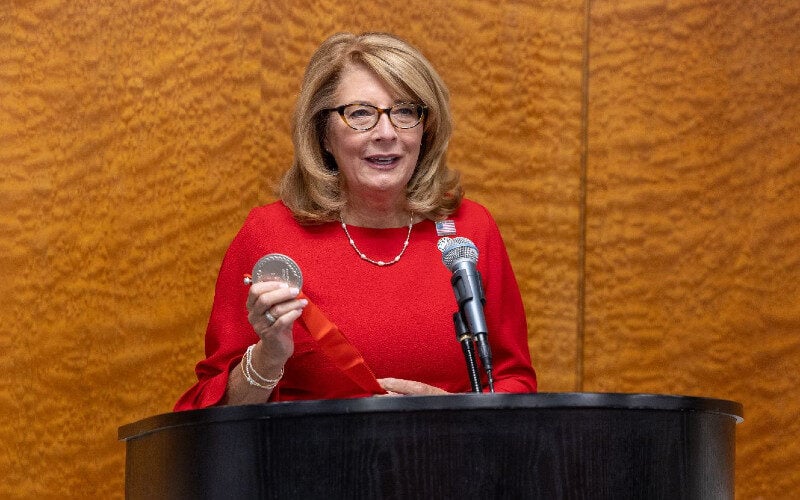
Paul Szmal: FLX Morning welcomes in for her regular visit State Senator Pam Helming. Senator, good morning. The session is finally done.
Guest: Yes, it is. We wrapped up at, it was right around 130 a.m. and I'll be honest with you, it's been a long couple of weeks. We've never seen a session like this where the budget flows right into the end of session. And if I had to guess, I'd say over the last couple of days, there were probably 600 bills put on our active list that passed through the House.
Paul Szmal: That's amazing to me that you're able to dissect, comprehend, and vote on that much material in that short amount of time.
Guest: Yeah, I think it's, personally, I think it's ridiculous. I think this would never fly at the local level. I don't believe that anyone has sufficient time to do a deep dive on the bills. And just as important is that the public doesn't have a chance to look at any of these bills to provide feedback on the bills. And this is the first time that I remember, you know, the Senate majority always uses a message of necessity on the budget bills. But this is the first time. I think we had two separate messages of necessity from the governor, where the governor waived the normal review period for bills in order for them to come to the floor and pass. That's just, that's not typical. That's not something we usually see.
Paul Szmal: Now, there were some items in the budget that I know that you advocated for. One of them was a change in the disabled veterans tax exemption.
Guest: Yes, I think that is, we heard a lot. My office got a lot of feedback from our veterans with the program, the way it was previously written. So through the budget, we've made some changes. And I think they're good changes. More veterans will be eligible for the property tax exemption if their county, their city, their town, their village, and the school district, whoever the taxing body is, if they opt into it. For some communities, I think, you know, this could be an impactful change on their bottom line. So they're going to have to evaluate and make the decision on whether or not they want to do it, which I support the opt-in versus the mandate change.
Paul Szmal: And there was also some movement on some rural health care legislation, another issue I know you've been focusing on.
Guest: Yes, so I advocated throughout the session for more resources for our rural communities. The comptroller did a report just last year where he identified the shortages in our rural communities, whether it's with general practitioners, OBGYN, dental services, etc. So during the budget debate, I asked some pretty tough questions backed up by the data on what are we doing specifically on workforce development in our rural communities? What are we doing? We had a suicide prevention report that also the comptroller audited the work and found that there are areas where we're not making the strides that we should be. So I did a lot of advocating, saw some good movement with some funding that will come to our rural communities. And also my legislation that I carry, establishing a rural suicide task force was passed. That's good news there for sure.
Paul Szmal: And also some movement on firefighters and EMS legislation. What was that about?
Guest: The firefighters legislation is a very positive thing. As everyone knows, we struggle in some of our communities to recruit new volunteers. It's just tough, right? It's people are trying to work full-time jobs, manage family, do all the things that they have to do. And then on top of that, those who volunteer are required to do an extraordinary amount of training for the positions. So a couple of things to show some appreciation for their service. We have passed legislation to increase the volunteer firefighters and ambulance workers' personal income tax credit from $200 to $800 for eligible individuals, and from $400 to $1,600 for eligible married joint filers.
Paul Szmal: Was there any movement, Senator Helming, any movement on any type of controlling of energy costs? Was there anything related to the budget that popped out?
Guest: So I would say the one positive from the budget was the rollback on the electric school bus mandate. That's something that, you know, I worked very hard on with my colleagues in pointing out why that bill was flawed and why it wasn't going to work, especially in our upstate communities. And I appreciate all the school districts who offered data, shared information, and also pushed for that rollback. So while I really appreciate that we were able to get that done, it delays the mandate by five years. So if you're looking at the big picture, really, it just it kicks the can down the road. And while our school districts have some very temporary relief, you know, they're trying to do their long term capital planning as well. And I guess there are just still more questions up in the air than there are answers.
And for the average homeowner, I know there's been a lot in the press about how great the budget is and all the things that have been done to reduce energy costs. Paul, I don't want to be Debbie Downer here, especially on a Friday. But I don't see that in the budget. I hope I'm wrong. I hope people see reductions in their energy costs. But what I saw were things like, in the budget, there was a $28 million allocation to NYSERDA that they can use for energy projects. But that $28 million is coming through assessments on the gas and electric utility companies. And we all know how this works. Once they get assessed something, it trickles down to the ratepayers. You know, the governor formed something called the Blue Ribbon Commission through the budget process. She makes all the appointments. And then this commission is supposed to study residential affordability. I think that people, especially in my area, would say we don't need another task force studying the issue. The utility costs are too high. We need to reduce them.
Paul Szmal: We're talking with State Senator Pam Helming here on FLX Morning on Finger Lakes Newsradio. Senator Helming, you've been working with the Seneca Lake Pure Waters Association on some of the flooding issues that Seneca Lake experiences.
Guest: Yes. So this year in particular, Seneca Lake, the water levels are so high. We've had a lot of windy days. And it creates a lot of wave action that is really causing issues for homeowners along the lake, destroying property, decks, docks, et cetera. But the erosion that's occurring is really bad. Had a call with Senator O'Mara, with members of the Seneca Lake Pure Waters Association, and others to discuss what are the next steps. And there are so many, Seneca Lake is unique compared to some of my other lakes in Lake Ontario, in who controls the water levels. So we're in the process of coordinating a meeting to bring together all the state and local stakeholders to address this issue. And while it may be too late for this year reducing the water levels, we need to know what the process is going forward so that we can act quicker, or those agencies that are in control of lake levels can act quicker in the future.
And I will say, I'm on the Senate Finance Committee and the Senate Rules Committee. Those are two pretty important committees in the Senate. And we have the privilege of confirming nominations for different appointments. And one of the nominations from the governor was for the, I think it's the Commissioner of Dishes, Department of Homeland Security. And I had an opportunity to ask him questions to bring up Seneca Lake and to make him aware, and he was aware of what's happening, not only on Seneca Lake, but Lake Ontario has hit the flood level mark. We have issues with flooding in Honiwai. We have issues with flooding in the town and village of Avon. It's all over. But I feel confident in the new commissioner who was confirmed by the full body, Terrence O'Leary, that he fully understands two important issues for upstate, the issues with flooding, and also he is a big advocate for our firefighters, especially our volunteers. So it will be great to have a person in leadership who understands the challenges that we face.
Paul Szmal: And we'll file that one under a to be continued because even though the legislative session has ended, your work doesn't stop.
Guest: Absolutely not. I'm really looking forward to being back in my district offices full time. There's a lot of work to do. I know. I think my schedule is so jam packed already. Visiting businesses, doing some fun stuff like going out to our libraries and reading to young people, you name it. There's a lot of work to be done. And one of the things that you did in the midst of everything that was going on in the final weeks of the legislative session was the New York State Senate Veterans Hall of Fame ceremony. And in your particular case, you got to honor a World War Two veteran.
Paul Szmal: Yes, that the Veterans Hall of Fame ceremony is one of the best days at the state capitol. It's the only time that the legislature actually pauses in our deliberations. And we recognize the veterans. Each senator gets to nominate one veteran from their district. And my honoree is Gene Girard. He's from Quail Summit in Canandaigua. Gene served in the United States Coast Guard. He enlisted when he was 17. And it was amazing recognizing Gene. He's 104 years old. His birthday was just two days before our ceremony. And he was called upon by the leader of the Senate to lead the Pledge of Allegiance. And Gene had two of his great granddaughters here. And they actually stood in front of all of the veterans and were able to, they signed the pledge while Gene recited it. It was just it's such a beautiful moment. And a great reminder for me personally of why the position that I hold, why it's so important. Just remembering all of our veterans and everything that they have done for this nation and what they continue to do for the people. It was amazing. And Gene is an incredible person. He continues to volunteer at the Canandaigua VA one day a month. He's an honoree member of the Cheshire Fire Department. He shows up there. Every Fourth of July, he walks in the parade. He's held all kinds of leadership positions as town councilman. He was an independent business owner, just an all-around great guy. And it was extraordinary to be able to recognize him.
Paul Szmal: I'm just drawing the picture in my head of the scene that you described. And I put a smile on my face.
Guest: Yeah, it's, it's moving. It really is. And honestly, Gene, so as I said, he was 104 years old. And we had two other World War Two vets. One of them was 102. And the other one was 100 years old. And, you know, there aren't too many of these World War Two vets who are around. And it's, I think it's just, I can't even put into words, like, I have goosebumps right now just thinking about the battles that they fought, what they've endured, and how they came back to continue serving other people. It's amazing. And all of our veterans have done that every war. But I don't know, there's just something about those World War Two veterans.
Paul Szmal: Indeed. Senator, as always, we appreciate it. Thank you for joining us.
Guest: Thank you, Paul.