

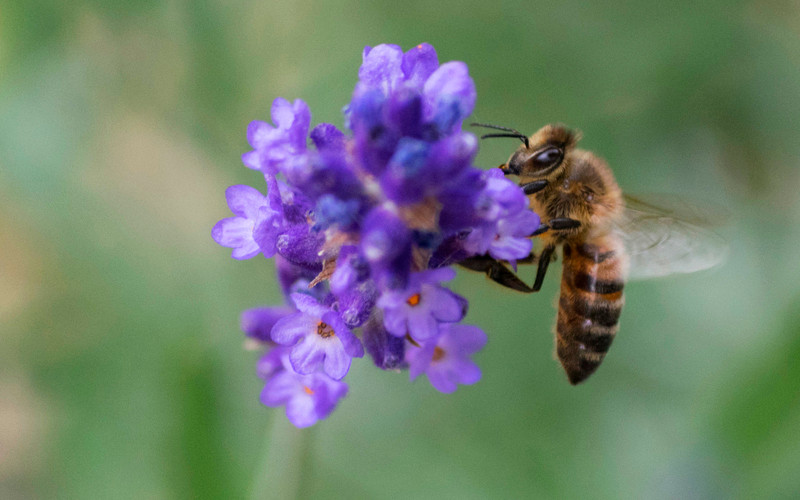
New York State Agriculture Commissioner Richard A. Ball on Monday highlighted actions the State has taken to promote and protect pollinator health across New York. The State released its updated Pollinator Protection Plan, outlining the coordinated work of State agencies to enhance pollinator health, including beekeeper registration, outreach, and education programs; continued support of the New York State Beekeeper Tech Team; improved landscape management at state facilities and along roadways to provide increased habitats; and more. This announcement comes as the State closes its celebration of Pollinator Week, honored nationally from June 19 through the 25th.
Commissioner Ball said, “Pollinators play a critical role in our agricultural industries statewide. We depend on our pollinating populations like birds, bees, butterflies, and other insects to help our crops grow and support the agricultural economy. Together with our fellow agencies, our partners at Cornell University, and our hardworking farmers, we are committed to conserving and growing our pollinator populations to ensure a strong future for agriculture and our environment in New York.”
Over the past several years, New York State has taken steps to promote honeybee health and better protect pollinators statewide. In 2022, the Department of Agriculture and Markets launched a beekeeper registration program to better help beekeepers maintain their colonies in a healthy condition, which has since registered 1,625 beekeepers who are managing nearly 31,500 colonies throughout New York State. Additionally, the Department’s honeybee health improvement program asks beekeepers to indicate if they intend to sell bee colonies to monitor colony movement across and between state borders. To ensure that the Department can properly inspect bee colonies, all New York State beekeepers must complete the registration form and renew their registration annually at no charge. Register here.
The Pollinator Protection Plan has also continued to fund, through the New York State Budget, the development, and expansion of the New York State Beekeeper Tech Team at Cornell University, which works directly with beekeepers to improve honeybee health, reduce colony losses, and increase profitability of the beekeeping industry. In its eighth year, the New York State Beekeeper Tech Team program team has worked with a total of 65 beekeepers who manage 47,604 colonies in New York State, representing approximately 60% of the state’s estimated 80,000 colonies.
In January 2022, the Department of Environmental Conservation (DEC) took action to limit the unrestricted use of certain pesticides that can impact bee and other pollinator populations. In effect as of January 2023, certain products containing the neonicotinoid (neonic) insecticides imidacloprid, thiamethoxam, and acetamiprid are now classified as “restricted use” to ensure applications are limited to trained pesticide applicators in specific situations. Restricting the use of these pesticides enables DEC to collect new data to determine where, when, and how they are used, as well as their potential impacts.
Additionally, partners at the Department of Transportation (DOT), Thruway Authority, and Office of General Services (OGS) continue to enhance pollinator habitats and employ best landscape management strategies on state land and along roadways.
Looking to the future, the State’s partners in pollinator protection will continue to build on the actions taken and identify new initiatives to protect and quantify New York’s pollinators.