The New York Department of State’s Division of Consumer Protection is warning residents to be on guard against funeral fraud and end-of-life identity theft schemes that target grieving families and friends.
State officials say scammers often take advantage of vulnerable individuals following the death of a loved one through a variety of deceptive tactics. These schemes can include stealing a deceased person’s identity to open credit cards, apply for loans, or commit other fraudulent acts. Fraudsters may also impersonate funeral homes or charitable organizations, create fake obituary websites, or pressure families into paying for unnecessary services.
“Grieving families and friends should never have their time, money, or personal information stolen by fraud,” said Secretary of State Walter T. Mosley. He encouraged consumers to understand their rights and take precautions when making funeral arrangements or handling a loved one’s affairs.
The warning comes as consumer advocates continue to highlight the growing financial impact of scams nationwide. According to the Consumer Federation of America, fraud costs consumers an estimated $119 billion annually. State Office for the Aging Director Greg Olsen noted that scammers often exploit moments when people are emotionally vulnerable, including after the death of a family member.
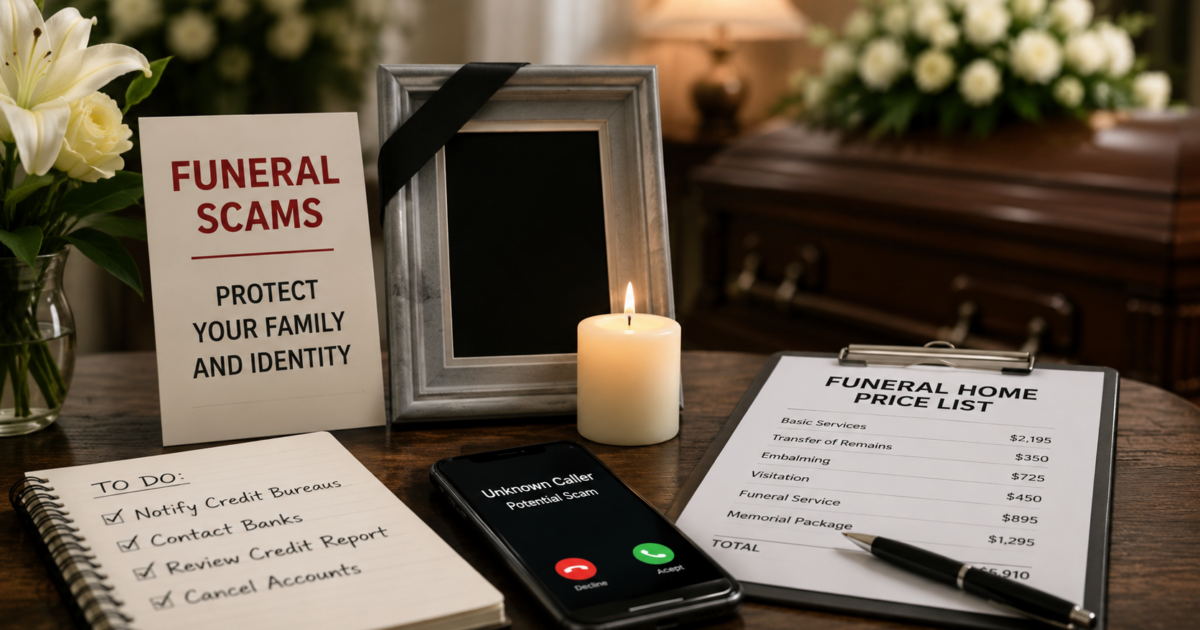
Among the red flags identified by the state are fake websites that resemble legitimate funeral homes, a lack of transparent pricing, pressure tactics that urge immediate decisions, and businesses that cannot provide proper licensing information. Officials remind consumers that funeral homes are required under federal and state law to provide itemized pricing information upon request.
The state is also urging families to take steps to protect a deceased loved one’s identity. Recommendations include limiting personal information in obituaries, monitoring for suspicious bills or debt collection notices, notifying credit bureaus and financial institutions of a death, and reviewing credit reports for signs of fraudulent activity.
Officials say funeral homes are generally only responsible for notifying the Social Security Administration of a death. Family members should also contact agencies such as the Department of Motor Vehicles, the Internal Revenue Service, credit reporting agencies, banks, and other financial institutions to help prevent identity theft.
Additional scam-prevention resources are available from the New York State Office for the Aging and the Department of State’s Division of Consumer Protection.