Paul Szmal: Good morning 815, it's FALX Morning Thursday, it's our monthly Red Cross segment and we're joined by the Executive Director of the Rochester area chapter of the Red Cross, Ken Lee, good morning sir.
Guest: Good morning Paul, glad to be here.
Paul Szmal: It's good to have you here, this is Ted filling in for Paul today.
Guest: Oh, okay. That's all right, no problem.
Paul Szmal: So I know that it's typical in the summer that blood donations tend to go down because people have other things on their mind, but I understand that there seems to have been an even bigger drop off this summer, do we have any idea why?
Guest: Well it's something that happens almost every summer, but the biggest thing right now is that there aren't a lot of people who are, for whatever reason, scheduling actual appointments to donate blood this particular summer. It is a critical thing that we go through every summer, but there are lots of injuries, I believe there's a statistic that I read the other day that teen drivers, there are a 30% increase in accidents by teen drivers thus far this summer. And so this is something that happens all of the time, and there is always going to be a need.
Paul Szmal: Let's talk about how blood products are used, the platelets can be used, the plasma itself, there are many different ways that blood can save lives.
Guest: Yeah, there are many different ways. Platelets can be used also to treat cancer patients, blood is used for transfusions. For example, if there's a major car accident and someone needs a lot of blood, they could need up to 100 units of blood just to save a life. So this is something that we always need. It's for car accidents, it is for fatal, not fatal injuries, I'm sorry, it's for car accidents, it's for shootings, it's for any type of seasonal sports activities. Kids are playing sports and they get injured and they require some assistance at hospitals. Really, we need to make sure that hospitals are equipped to be able to provide life-saving blood.
Paul Szmal: So I know one of the things you do is incentives for people to donate, and you got a chance to get a Looney Tunes Red Cross t-shirt in July while the Spill Heights last.
Guest: That is so true. So there's a couple of things going on. Right now, that one, today's the 9th, and that one goes on all the way until the 12th, the Looney Tunes t-shirt. In fact, I'm giving blood today, so I'll get a chance to get my Looney Tunes t-shirt. But from July 12th, you can go schedule an appointment. There are a number of different locations where people can go to, and you can get a Looney Tunes t-shirt. In addition to that, for the entire month of July, one can actually receive free movie tickets. And so there are incentives, but more than the incentives, it's important that we encourage people to sign up and give blood. There are certain people that may be afraid of the needles, there are certain people that may be afraid of what's going to happen with me, but it's a very safe and fun experience, and it's rewarding.
Paul Szmal: Yeah, just take, I like to do this when we have these segments, take us through the process for people. Because I know you have donors that come back again and again and again, so I think a lot of what we're speaking to today are potential first-time donors. So if somebody hasn't done it, just run them through the typical process of giving blood.
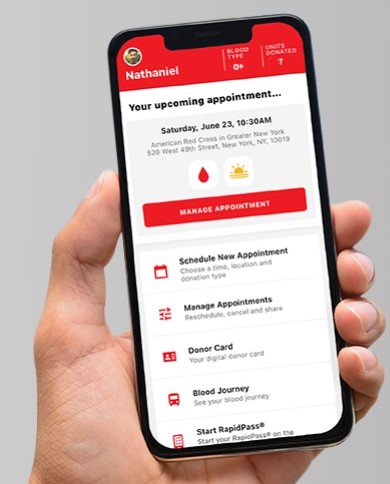
Guest: So there's a couple of ways that they can sign up. You can visit redcrossblood.org, you can call 1-800-RED-CROSS, or you can download the Red Cross Blood Donor app. And then all you have to do is you can actually select a date, you can select a location. I'm going to speak directly to the Blood Donor app, because I did that for my appointment today. I said I wanted to donate blood today, I selected the location, and then I booked it right online. It's real quick and easy. There are certain locations that, now it's best to book it so that you can get in and out quickly. You can be finished within an hour of donating blood. But they do accept walk-ins as well. It's just a matter of finding out the locations. We have fixed sites, we have mobile sites, and where those blood drives are being held, it's just a matter of looking those things up.
Paul Szmal: Yeah, redcrossblood.org is always the best place to find a drive near you, and there are drives happening all the time. So let's talk about hosting a drive. Usually they're sometimes in schools or industrial plants and settings that can handle people. How can someone host a drive if they'd like to help?
Guest: First, I really appreciate you asking that question. We are always looking for partners to make it easier for members of communities to donate blood. What they would simply do is get in contact with us. One of our blood sponsors will be in contact with them. We can schedule a date. I need to let folks know that those things take time. So if someone wanted to set up a blood drive at a particular location, they need to make sure that they have a certain number of square footage, they need to make sure that the facility is large enough so people can come and visit. We can walk them through the process of promoting their particular blood drive. It's just a matter of having a conversation. Someone can reach out to me as the executive director, or they can reach out to RedCrossBlood.org, and we will get in contact with someone and have that conversation. It typically takes a few months before we can set up a mobile blood drive, though.
Paul Szmal: And when you do have drives, you need volunteers. Of course, all across Red Cross, and you go to RedCross.org slash volunteer to learn about all the opportunities, but one is volunteering to help out with blood drives.
Guest: Yes, very important to greet people. We call them blood ambassadors, and so we're always looking for volunteers. And I'll tell you another thing that we're looking for volunteers for. We're looking for drivers. So what we do in our particular area, all of the blood that's being processed is processed in West Henrietta, at our West Henrietta location. I believe it's 110 square foot facility. It's a really amazing place to visit. The blood is processed, and it goes directly to the hospitals. We have volunteers that actually drive our vehicles and transport the blood to those hospitals. So we're looking for a number of different volunteers. There's a number of different ways that people can get involved with that.
Paul Szmal: One of the things we haven't talked about yet, if you go to RedCrossBlood.org, one of the uses for blood products is for sickle cell patients. Can you explain sickle cell and how these blood donations help those patients?
Guest: Sure. Thanks for asking that question. So sickle cell is a very rare disease. I believe it's roughly about 100,000 people are affected by it. And what we do is we go through a screening to ensure that, to see if people can actually help with the transfusions that sick people who suffer from sickle cell. We go through a screening to make sure that their blood is a match. And typically, members of the African-American community and members of the Hispanic community are typically good candidates to provide services or blood for those people suffering from sickle cell. Sickle cell, without the treatment, they live in a lot of pain. And their lifespan is shortened. With the treatment, they can actually go get the treatment, they're in less pain, and they can extend their lives. So it's very critical. Not to say that other people aren't good candidates, but you can increase the chances if we can have more members of the African-American community donating blood and more members of the Hispanic community donating blood for sickle cell.
Paul Szmal: I know there's a shortage in general, but are there specific blood types that are really in need right now?
Guest: So there is a shortage. I will say that O positive and O negative is probably the most requested blood type out of all from the hospitals.
Paul Szmal: All right. There are blood drives going on all over the Finger Lakes all the time. RedCrossBlood.org is your headquarters. You can download the blood donor app. There's what's called Rapid Pass, where you can fill out all the paperwork and stuff ahead of time. And it is a simple process. I'm sad to say I haven't done it in a while, so maybe I have to get out and do my part here. But it is easy. It doesn't take a lot of time. It doesn't hurt. The people are experts. And you save a lot of lives. Ken Lee, Executive Director of the Rochester Area Chapter of the Red Cross, thanks for the time. And I hope we can get some drives going and get some people to attend them.
Guest: Thanks for pushing this very important message. Really appreciate the time.