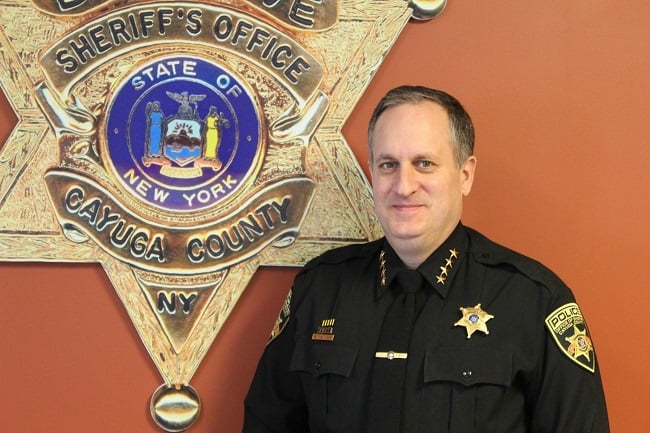
Paul Szmal: Good morning, it's 8.36, it's FLX Morning Thursday. I'm Ted Baker and it's our Law Man Thursday. We're joined by Cuyahoga County Sheriff Brian Skank. Good morning.
Guest: Good morning, Ted. Good morning to everybody listening.
Paul Szmal: I know you like to feature some of the people you work with, so introduce your guest partly so that I can see if I've been saying her last name anywhere close to correctly this morning.
Guest: I'm proud to have Jessica Krasminski, a Humane Law Enforcement Officer with our local SPCA with me.
Paul Szmal: All right, Jessica Krasminski, is that it?
Guest: Yes.
Paul Szmal: All right. Welcome, it's good to have you here.
Guest: Good morning, thank you.
Paul Szmal: We're gonna talk to you about what you do in a moment, but we're gonna start with the Sheriff. First thing is, I don't know if I'll talk to you again before your term ends, is retirement starting to become a little more of a reality for you?
Guest: It is, it's starting to set in. I've been working on the transition with Lieutenant Franklin, who's the only candidate for the position now, so I'm hopeful that he's going to be successful in his run, but we've been working on the transition and it is certainly setting in. I'm asked almost daily how much, you know, am I counting down the days, and I'm not officially counting down the days, but there aren't too many left. We've got about a little over five, five and a half months, so yeah, it's definitely coming to reality.
Paul Szmal: Of course, it's been in the news of late that one of the deputies was arrested by state police, and we're not going to go into the details of that case since it's been reported and there's obviously a limited amount that you can talk about, but what I do want to talk about is how is that investigated when it's a member of law enforcement who's accused?
Guest: So in this particular circumstance, the criminal case was clearly investigated by another agency, the New York State Police had that investigation, and I was made aware of it towards the end of their investigation and did assist them with a few things, but we also have to investigate those things internally. We do our own internal administrative investigation when something like that pops up, and that's what we're working on now. I think I've made that statement right after the arrest that we're working on that internal investigation, and depending on the findings of that, certainly this individual's, you know, entitled to his due process, and we're going to make sure we do a thorough investigation, and we will deal with anything administratively if that's warranted, depending on the investigation that we do.
Paul Szmal: We just went through the Fourth of July holiday, and it was a big one, America's 250th birthday. Talk about some of the parades and events and what you do in terms of being out on the road and keeping people safe in a holiday that unfortunately combines alcohol and explosives.
Guest: Sure, yeah, that's not a good combination, but I did want to mention briefly today as we talked about the parades and all of the planning and everything that goes into this, because not just our agency, but all of the agencies that are impacted in your listening area, there's a lot of things that go on behind the scenes to make sure that these parades work or that these fireworks displays work, a lot of pre-planning for safety purposes, and we're certainly doing a lot of that in the weeks leading up to our local fireworks display at Emerson Park and other locations throughout our county here in Cuyahoga County, and some of the parades that we had, a large parade in Fairhaven, a parade in Awasco, and I know there were a lot of parades throughout the listening area, but law enforcement is very active in certainly maintaining traffic safety and, you know, just overall safety in general, not just at parades too, but as you said, addressing issues involving alcohol, we're out there on the roads looking for anybody that's driving under the influence, but a very busy time for us this past weekend was no exception to every year, but one that I really enjoy each year, I love engaging and being in the parades, marching in the parades, and you know from all of the people that attend that it's a really great time, and being the 250th, that was really exceptional this year, so it was a great weekend.
Paul Szmal: Do you think that the messages are getting through, the don't drink and drive message, and just being safe and being smart, are you seeing any evidence of that over the years?
Guest: Well, I think for some, yes, but unfortunately when you look at the DWI arrest numbers or driving under the influence arrest numbers, we're still seeing a pretty steady number, so I think that there are still unfortunately a lot of folks out there that are breaking the law and doing that, but I believe that the messaging does have an impact. I think we would certainly see more if we weren't doing that, so I guess my answer would be yes and no. I think it's having an impact, but we unfortunately still see a lot of people violating those laws, and we'll continue to aggressively try to address that as we move forward.
Paul Szmal: We've talked over the years about the sheer size of the county. It's about 75 miles, I think, north to south in Cuca County, so my question is how do gas prices affect how much road patrol mileage you can put on? You have a certain budget that you have to keep. Do you have to cut back on patrols when gas gets way up?
Guest: Well, we haven't gotten to that point yet. We do shift funding around in our budget when we have budget challenges with certain areas of the budget itself, but it is a 700 square mile county, and we do, it's hard to, you know, it's hard to address that when you budget for a certain amount of money at the end of the year, and then going into the following year, gas prices go up so much it has a very negative impact, so we haven't gotten to the point where we're purposely not patrolling. I mean, we have to cover the patrol area, we have to respond to emergencies, and right now we just, you know, we shift funding around or do what we need to do to make sure that we can make it work, but I have worked for the Sheriff's Office long enough to remember times when we would actually park our cars, not drive as much, but drive to our patrol area, just park and be visible in a certain location and not drive, but we haven't gotten to that point this year, and hopefully, hopefully we don't.
Paul Szmal: One more thing before we talk with Jessica, and this is very apropos, our last segment was the Red Cross about the blood shortage this summer, so you're hosting a Red Cross Blood Drive on July 29th.
Guest: We are, we do two a year, we're hosting one again on that date from 9 a.m. to 2 p.m. here at the Sheriff's Office. We encourage anyone that can help, there's always a shortage, but go to RedCross.org if you'd like to sign up for our blood drive or another one, and we'd love to have you come visit ours and donate along with us and all of our staff here.
Paul Szmal: All right, I've really enjoyed over the years getting to meet the people that you work with in the Sheriff's Department. Jessica Kryzomenski is a Humane Law Enforcement Officer with the Greater Cayuga SPCA. Good morning to you.
Guest: Hi, good morning.
Paul Szmal: So tell me about the Humane Law Enforcement Officer. So are you actually deputized, so to speak? Do you have law enforcement powers?
Guest: Yes, so I am a New York State Certified Peace Officer, so I'm able to enforce Article 26, which part of New York State law directly affects people who neglect, abuse animals, and giving justice to the animals that deserve it.
Paul Szmal: How do you generally find out about these cases? Is it mostly people in the public reporting it?
Guest: Yeah, absolutely. So the public will, you know, if they call the SPCA, we direct them to their local law enforcement agency. They will file the complaint with them, and we partner with local agencies, you know, especially like the Cuyahoga County Sheriff's Department. They've been great with assisting on these calls, but the initial call is to go through local law enforcement, so the 911 call center. But we also take calls from other government agencies like Adult Protection, CPS. We work directly with them to kind of navigate through some of the more difficult cases.
Paul Szmal: So let's talk about what the law actually provides. For example, this time of year when it's hot, what does the law say in terms of providing, for example, shelter for dogs outdoors and water and things like that?
Guest: Sure. So a dog that is left outside, it has to have shelter that's appropriate for its breed, its size, and it has to be large enough for the animal to get up, stand up, turn around. The dog should always be provided with water. It has to have a waterproof roof, insulating if it is, you know, the colder temperatures, you know, and obviously just, you know, judgment. If it's very warm outside, you know, it's probably not a great idea to leave your dog outside. Just, if you're hot, your animal's hot. So just using a little common sense, it goes a long way.
Paul Szmal: So take us through how you investigate a case and how you make the decision whether an animal or animals need to be removed.
Guest: So obviously there's really not a black-and-white answer to that. It, you know, it all depends on, you know, the condition of the animal, the condition of the environment that the animal's in, and how cooperative the potential animal owner is that determines, you know, how we're going to proceed with a particular case.
Paul Szmal: If an owner is cooperative and apologetic, can they get the animal back if it is taken away?
Guest: Oh, absolutely. Like I said, you know, discretion, and there's, I don't have a black-and-white answer for you. It just, it all depends on, you know, the level, severity of the crime, and, you know, if the animal's in a horrible condition, obviously you don't want that animal to go back into that situation.
Paul Szmal: Do you find cases of abuse that are primarily economic, where someone finds they can't afford food, or they can't afford care, and it's not, it isn't so much malice as it is, you know, we can't afford to feed the dog?
Guest: Sure, that would fall under neglect, and again, it's just using discretion. We do have a couple of resources at our shelter, which I found has been great for people that are in that situation. So, like how you mentioned about food, we do have a pet food pantry, so the public can use that to utilize, you know, food, or actually supplies. We have, you know, sometimes it's stocked with litter boxes, or litter. Sometimes we do have flea medication that we can give out, too, if it is donated to the shelter. As far as medical care goes, you know, that's another topic. I understand it is difficult this time, this, you know, for people to be able to provide the medical care that certain animals need, but, you know, an animal is a responsibility to an owner, and, you know, if they can no longer provide that medical treatment, then they need to look at other avenues, as far as maybe surrendering to an animal shelter, or, you know, somebody that can actually give that animal the care that they need. So, that would fall under, like, neglect, not necessarily intentional acts of cruelty, but neglectful acts.
Paul Szmal: Let's talk about needs for the shelter. I know there are always things that you can use. What kinds of things could the public donate?
Guest: Absolutely. So, obviously, any type of monetary donation is great, but also, we like to keep our pet food pantries stocked. So, dog food, cat food, I know right now we're really strapped for cat food. This time of year, kitten food is great, because we're getting a lot of kittens in. Any type of cleaning supplies, paper towels, laundry detergent, just things that, to help us maintain the care of the animals that we have.
Paul Szmal: What's the process for adopting from the shelter?
Guest: Yeah, so, we have a few great staff members that do our adoptions. They're encompassing our care program that we have at the shelter, and if you're interested in an animal, our website is updated every 15 minutes. You can always kind of get an idea of what animals we currently have in the shelter, if you can't stop in. But, if you do stop in, and there's an animal that you're interested in, all you gotta do is talk to a staff member, have a conversation, and we'll tell you what we know about that animal. We'll kind of see what is a good fit for you, kind of see what you're expecting and looking for, for an animal, and we'll try to pair you up with what fits best. We have a couple cool different programs. You can either do an outright adoption, where you and the animal right off into the sunset, you don't ever have to come back, or we offer what's called a slumber party. So, it gives you two weeks to kind of gauge whether or not it's gonna be a good fit for you and your family. You can take that animal into your home, and you get two weeks to decide, and hopefully, fingers crossed, everything goes well, and then you can finalize within that two weeks.
Paul Szmal: The website for the Greater Cayuga SPCA is GCSPCA.org. You can learn all about what they do in adopting. Jessica, thanks for what you do, and thanks for sharing with us. We really appreciate it.
Guest: Thank you so much. It was great talking to you.
Paul Szmal: You too. Sheriff, I don't know if I'll get to speak to you again before retirement. If I don't, thanks for what you've done on the radio over the years, and then what you've done with your agency. You do a great job. I've said we've been blessed with some great sheriffs around this area in the time I've been on the radio. So, thanks so much.
Guest: Thanks, Doug.